10 traditional La Garrotxa dishes you should try
Ten traditional La Garrotxa dishes worth trying, from patates d'Olot and fesols de Santa Pau to farro, buckwheat, mountain stews and local pastries.
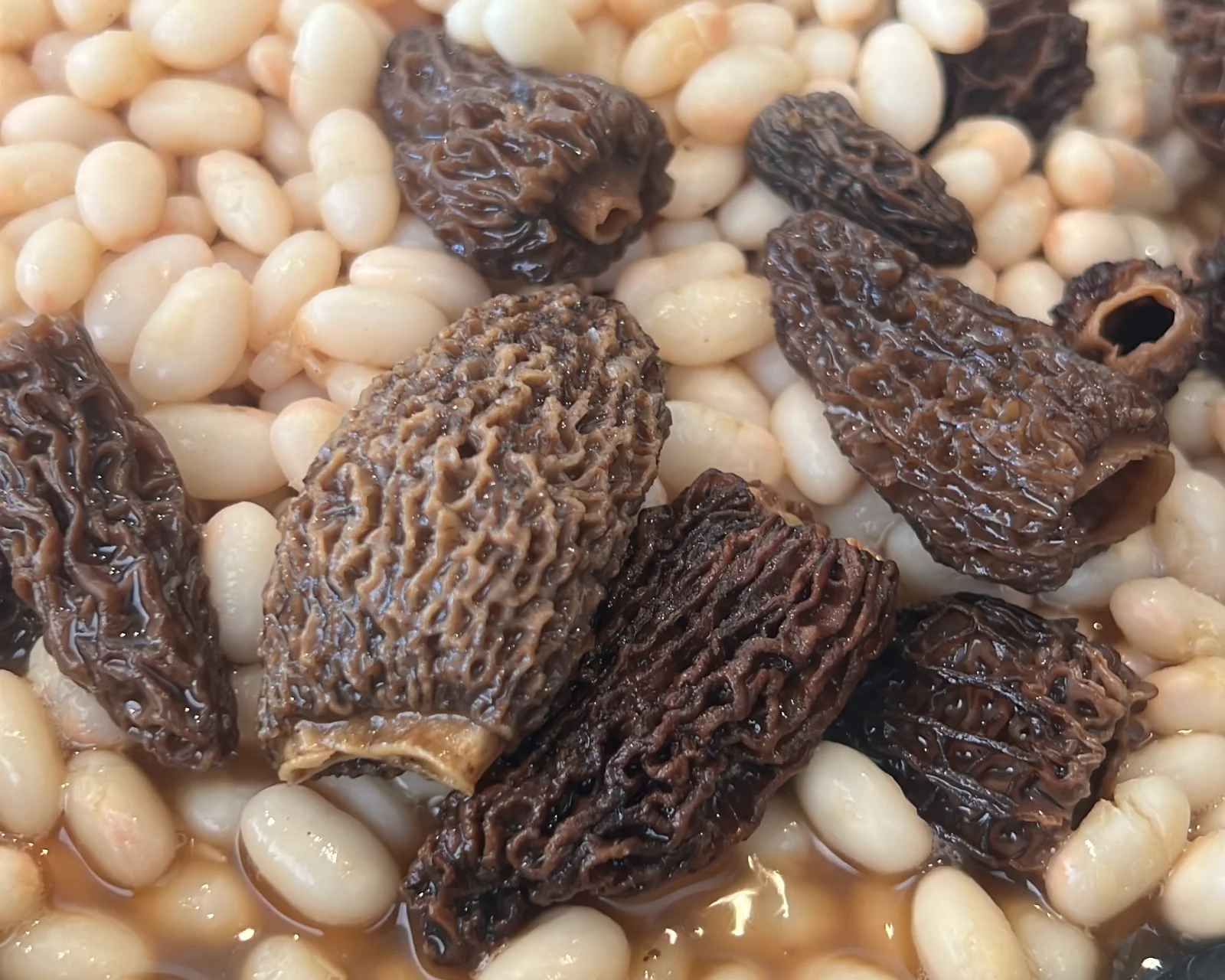
La Garrotxa's food is inland mountain cooking, closely connected to pork, beans, root vegetables, grains and forest produce. It is also considerably less volcanic than some marketing might suggest. Local cooks do not prepare dinner over lava or add ash to every available plate.
Cuina Volcànica is a restaurant collective established in 1994 to promote regional ingredients and preserve the local recipe book while allowing chefs to reinterpret it. The name describes the territory and philosophy, not a compulsory cooking technique.
These ten dishes and specialities provide a useful introduction to what people eat in La Garrotxa. Not all are available every day. Some are seasonal, while others are easier to find in a butcher's shop or bakery than on a restaurant tasting menu.
1. Patates d'Olot
Patates d'Olot are probably the region's most recognisable dish. A filling of slow-roasted meat is placed between two thin potato slices. The parcel is sealed, coated and fried until crisp outside and soft in the centre.
The recipe was popularised by La Deu restaurant and is also known as patates de la Deu. Modern versions contain mushrooms, cheese or vegetables, but first-time visitors should begin with the traditional meat filling.
They are normally served as a starter. A portion seems light until you remember that it consists of fried potato filled with roast meat. The traditional recipe published by Catalonia's tourism authority explains the preparation.
2. Fesols de Santa Pau with botifarra de perol
Fesols de Santa Pau are small white beans with thin skins and a creamy texture. They have protected designation of origin status and grow in volcanic soils across several local municipalities.
A traditional preparation combines them with botifarra de perol, a cooked pork sausage that is sliced or crumbled before frying. The beans may also accompany bacon, mushrooms, salt cod or more contemporary dishes.
Do not confuse genuine protected fesols de Santa Pau with an ordinary white bean carrying an optimistic geographical description. The growers' association provides more information about their history and cultivation.
3. Farro from the Vall de Bianya
Farro is a thick soup traditionally made with stock and white maize flour. It was an inexpensive, filling meal closely associated with the Vall de Bianya and its former grain mills.
Its consistency lies somewhere between dense soup and light porridge. Traditional versions may contain carn d'olla stock, bacon or other pork products. Contemporary chefs also use farro in bread, snacks and desserts.
It does not appear on every daily menu. You are more likely to find it during food festivals or in restaurants committed to regional produce. If it is available, order it: farro explains the area rather better than another goat's cheese salad.
4. Farinetes de fajol
Fajol is the Catalan name for buckwheat, a crop that once played an important role in the local diet. Despite being treated like a grain, it is not botanically a cereal and is naturally gluten-free.
Farinetes are made by cooking buckwheat flour into a dense paste. Once cool, the mixture is sliced and often fried, then served with sugar, honey or a little ratafia. It was traditionally a winter dish or dessert.
The flavour is toasted, earthy and more rustic than a conventional cake. Cuina Volcànica preserves updated recipes, including farinetes with honey and ratafia.
5. Peus de porc with naps negres
Peus de porc amb naps negres combines slow-cooked pig's trotters with black turnips traditionally grown around areas such as the Vall d'en Bas. The nap negre is dark outside, white inside and has a stronger, sweeter flavour than a common turnip.
The turnip absorbs the sauce while retaining enough texture to remain identifiable. The resulting dish is rich, gelatinous and firmly suited to cold weather.
Anyone uncomfortable with offal textures is unlikely to discover a sudden passion here. For those who enjoy them, this is one of the most distinctive combinations in the local recipe book.
6. Civet de senglar
The region's forests and mountains explain the presence of game dishes. Civet de senglar is a wild boar stew cooked slowly with wine, vegetables, herbs and a dark, concentrated sauce.
It may be served with potatoes, mushrooms, cabbage or black turnips. When prepared properly, the meat becomes tender and the sauce develops depth without tasting overpowering. A rushed version demonstrates why game stews require patience.
It is more common during colder months and will not always be available. Ask about seasonal dishes in traditional restaurants, particularly around Alta Garrotxa and the Vall d'en Bas.
7. Rostit de Festa Major
Rostit de Festa Major is a celebration casserole containing several meats, usually chicken, rabbit, pork or a mixture. They cook slowly with onions, herbs, wine or spirits and sometimes dried fruit or prunes.
The recipe is not exclusive to La Garrotxa, but it belongs firmly to the region's domestic and festive cooking. Every household has a variation, making any attempt to declare one official recipe a reliable way to start a long family argument.
Look for tender meat and a properly reduced sauce. The Cuina Volcànica archive includes a traditional rostit recipe.
8. Escudella i carn d'olla
Escudella is one of Catalonia's great soups. Its stock combines vegetables, pulses, pasta and several meats. The carn d'olla is the collection of cooked pork, chicken, sausages and pilota, a large seasoned meatball, served afterwards.
In escudella barrejada, some meat and vegetables are mixed directly into the soup. This is winter food, inn food and food for days when ordering a salad would suggest inadequate preparation.
It is not unique to La Garrotxa, but it fits the region's mountain cooking and remains part of traditional menus and family celebrations.
9. Pa amb tomàquet with local cured meats
A cured-meat board with pa amb tomàquet may appear too simple for a list of dishes. That simplicity is precisely what reveals the quality of the product without requiring a sauce to rescue it.
Look for botifarra, llonganissa, fuet, bull, cured ham and, when available, piumoc, a traditional pork product. Olot, the Vall d'Hostoles and Castellfollit de la Roca have long traditions of butchery and charcuterie.
Order it as a starter, casual dinner or part of an esmorzar de forquilla, Catalonia's substantial fork breakfast. A huge board immediately before wild boar stew may compromise the rest of the research.
10. Tortell entorxat d'Olot
Tortell entorxat is an Olot speciality made with flour, eggs, sugar, anise and aniseed. It has a twisted ring shape and a texture closer to sweet bread than a cream-filled cake.
It is particularly associated with Palm Sunday, although some bakeries produce it during much of the year. You may also find coca de llardons d'Olot, another local pastry displaying limited concern for calorie counting.
Buy tortell from a traditional bakery and serve it with coffee or a small glass of ratafia. It works perfectly well without being reconstructed as foam.
Finding genuinely local food
Look for traditional fondes, long-established restaurants and kitchens working directly with regional producers. The Cuina Volcànica collective includes restaurants using La Garrotxa ingredients, although each interprets them differently.
Ask which dishes are seasonal and what is prepared in-house. A restaurant's physical location in La Garrotxa does not automatically make everything on its menu local.
For a first meal, share patates d'Olot, continue with fesols de Santa Pau or a stew, and finish with tortell entorxat or farinetes de fajol. A walk afterwards is advisable, not because of tradition but as straightforward digestive engineering.