Fageda d'en Jordà: walking routes, access and parking
How to visit la Fageda d'en Jordà: parking, walking routes, the best time to go and practical advice for enjoying this volcanic beech forest.
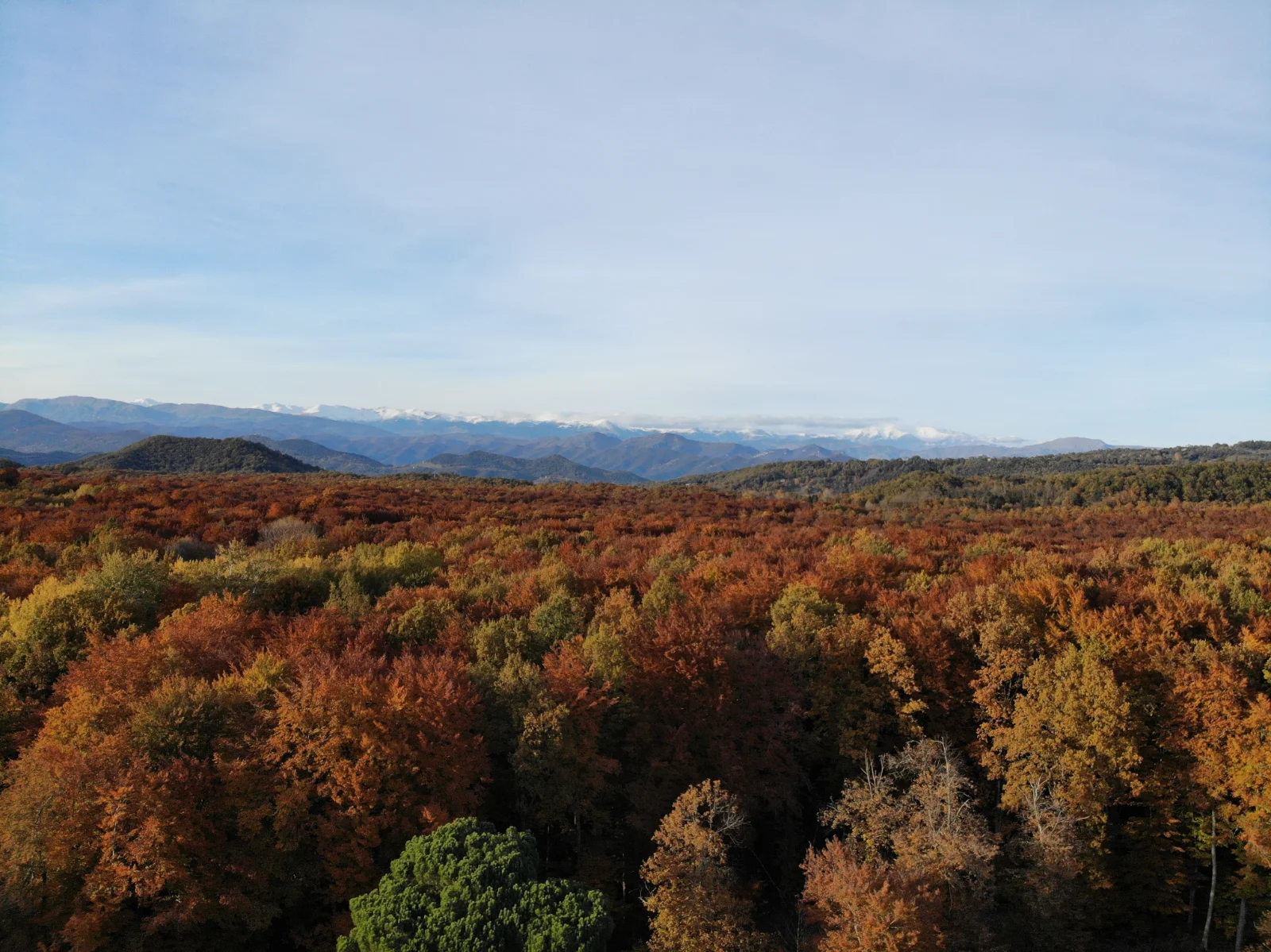
Yes, la Fageda d'en Jordà is worth visiting. It is also one of the busiest natural sites in La Garrotxa, so a little planning helps. Turning up on an autumn Sunday and expecting an empty forest is optimistic even by holiday standards.
You can choose a short walk of roughly 35 minutes or include the forest in a 10.9-kilometre loop through the Croscat and Santa Margarida volcanoes. The right choice depends on your available time and genuine enthusiasm for walking, rather than how energetic you felt while planning the trip at home.
Why is la Fageda d'en Jordà special?
The Catalan word fageda means beech forest. This particular forest grows at approximately 550 metres above sea level, an unusually low altitude for beech trees in the area. More importantly, it stands on an old lava flow from the Croscat volcano.
The solidified lava created an uneven landscape of small mounds known locally as tossols. Beech trees, moss-covered volcanic rocks and constantly changing light now cover the terrain.
There is no major viewpoint or single monument waiting at the end. The point is to walk, look around and move beyond the busiest entrance paths. Visitors requiring a new attraction every ten minutes may find that the forest refuses to follow the schedule.
Getting there and parking
The main entrance is the Can Serra area on the GI-524 road between Olot and Santa Pau. It has regulated parking, a natural park information centre, public toilets and the starting points of several marked walks.
Parking is paid. Current official information says that advance booking is not required, although arriving early is recommended. Access arrangements can change seasonally, so check the latest official information before travelling.
If Can Serra is full, do not park on the roadside, across farm entrances or on private tracks. Waiting, changing the order of your day or using seasonal public transport is less inventive but considerably more respectful.
The drive from Olot is short. Bus services also connect the volcanic area on selected dates, but check the current timetable before attempting the visit without a car.
The short walk: Joan Maragall trail
The simplest option is route number 2, known as the Joan Maragall trail. This circular, almost level walk begins opposite the Can Serra information centre. Its official approximate duration is 35 minutes.
A pedestrian underpass leads beneath the road and into the forest. Near the beginning stands a monument to the poem Catalan writer Joan Maragall dedicated to la Fageda. The path then loops through the beech trees and returns to Can Serra.
This is the best choice for a first look, families with younger children or anyone who does not want to spend half a day hiking. The 35 minutes represent walking time. Photography, stops and children examining every stone will make it longer, which is hardly a serious problem.
The trail is short and has little ascent, but that does not guarantee that every section is suitable for all wheelchairs or pushchairs. Ask the information centre about current accessibility and path conditions before starting.
The full loop: Fageda, Santa Margarida and Croscat
For a half-day walk, official route number 1 connects the three best-known volcanic landscapes in the area. The circular trail covers 10.9 kilometres, climbs 290 metres and has an estimated walking time of 3 hours and 15 minutes.
It crosses la Fageda before climbing the Santa Margarida volcano and descending into its broad crater, where a small chapel stands. The route then continues to Croscat. Former quarrying exposed the volcano's internal layers, producing striking bands of red, black and ochre material.
The walk is not technically difficult, but it includes climbs and sections that can become muddy after rain. Interesting stops also make the real duration longer than the official walking time. Bring water, food and shoes with decent grip.
Check the official route description and download the itinerary before leaving.
The best time to visit
Autumn brings the famous brown, copper and yellow leaves. It also brings everybody who has seen photographs of them. Visit on a weekday and early in the morning for a quieter experience.
Spring covers the forest in intense green, usually with pleasant walking temperatures and less seasonal hype. It is arguably one of the best times to go.
Summer offers welcome shade beneath the trees, although the entrances can be busy. Avoid the hottest part of the day if you are combining the forest with the more exposed volcanoes.
Winter removes the leaves and reveals more of the volcanic terrain. It is less dramatic for visitors seeking the classic autumn image, but noticeably quieter.
Rain makes the moss, rocks and trunks especially photogenic. It also makes the ground slippery. Volcanic mud shows very little respect for clean white trainers.
What not to do
Stay on marked paths, avoid climbing the tossols and leave rocks and plants where they belong. Do not play music through a portable speaker either. Other visitors came to hear the forest, not your carefully selected playlist.
The most photographed spots near the entrance can develop small queues in autumn. Walking another five minutes normally provides more space and a forest that looks remarkably similar.
Do not confuse la Fageda d'en Jordà with La Fageda Fundació, a social enterprise widely known in Catalonia for its dairy products. Visiting its facilities is a separate activity and must be arranged independently.
What to combine with the forest
For a relaxed day, walk the Joan Maragall trail before visiting Santa Pau for lunch and a tour of its medieval centre. For a proper hiking day, complete the full loop through Santa Margarida and Croscat.
Olot and Espai Cràter are useful before the walk if you want to understand the volcanic landscape. After several hours outside, Santa Pau and a reserved table may sound more convincing than another climb.
The verdict
La Fageda d'en Jordà is not a secret place, nor does it need to be. Its volcanic terrain, atmosphere and choice of walking routes justify the attention. Arrive early, choose a route that honestly suits your group and walk beyond the entrance. The forest improves considerably once the car park can no longer be heard.