10 non-touristy places in La Garrotxa worth seeing
Ten non-touristy places in La Garrotxa, from forest chapels to lava cliffs, with honest advice on what is worth your time and how to visit them.
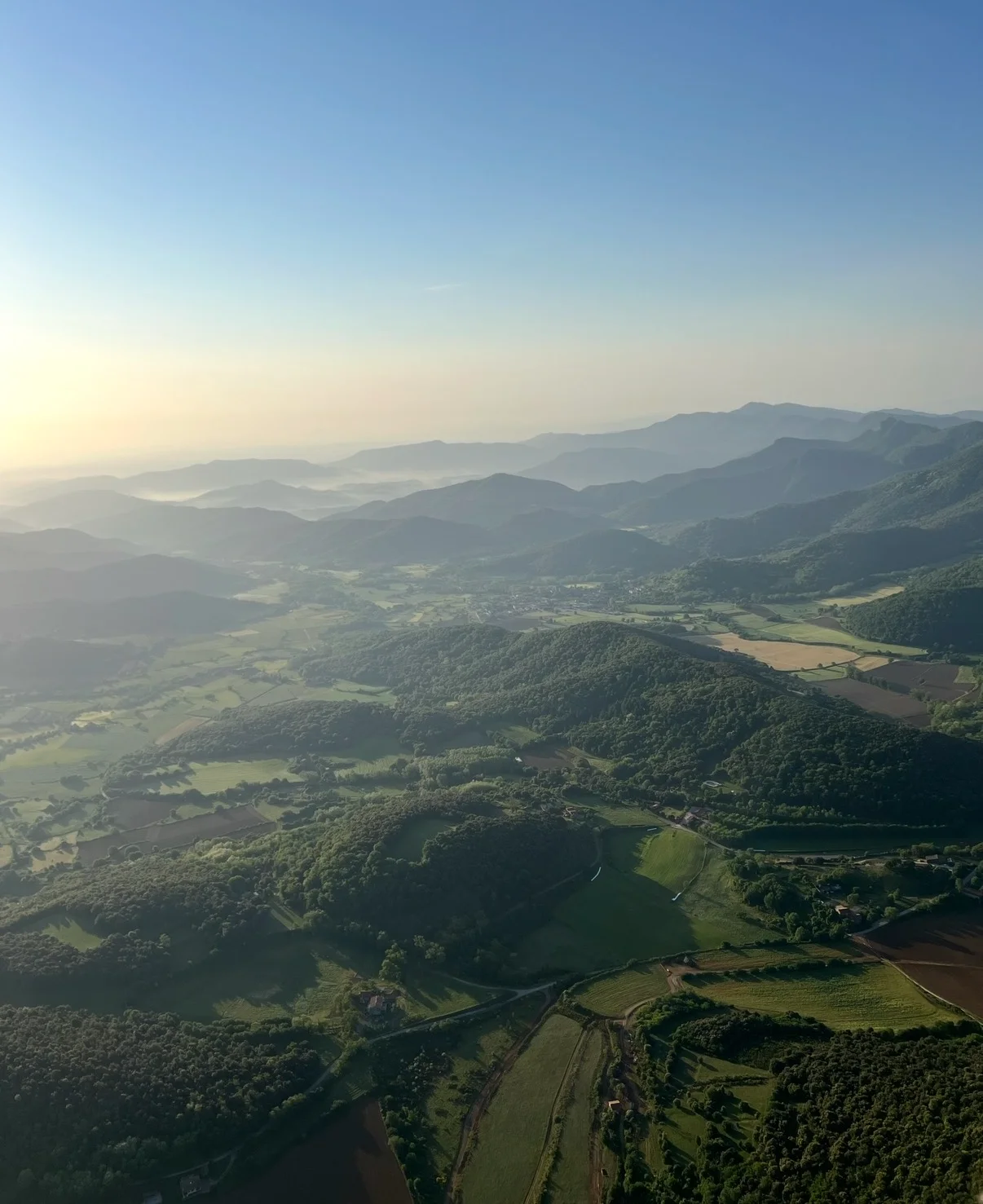
The quieter side of La Garrotxa usually begins at the end of a minor road, on a trail without a souvenir shop, or beyond the spot where everyone takes the same photograph. It asks you to stop trying to see everything in a hurry.
This list does not replace la Fageda d'en Jordà, the Croscat volcano or Santa Pau. They are popular for good reasons. But if you have covered the classics, or would rather walk without joining a procession of hiking boots, try these ten alternatives.
What “non-touristy” means here
It does not mean secret, untouched or unknown. These places are documented, several lie on marked routes and local people have used their paths for generations. They simply sit outside the standard weekend itinerary.
For overseas visitors, “ermita” means a small rural chapel, often locked and valued as much for its setting as for its interior. Do not expect it to operate like a staffed attraction.
1. The Corb chapels
Sant Miquel del Corb and Sant Martí del Corb appear among beech trees and small clearings on the slopes of serra del Corb, close to Les Preses. The point is not to tick two churches off a list. It is the walk itself: shade, silence and shifting light make this woodland feel much larger than the map suggests.
The full route can connect with Xenacs and the puig Rodó viewpoint. This is not an urban stroll or the place to debut spotless white trainers. If all you want is one chapel photograph, the effort may seem excessive. If the path matters as much as the destination, it is absolutely worthwhile.
2. Sant Julià del Mont
A route from the Santa Pau area climbs towards Sant Abdó i Sant Senén and the former sanctuary of Sant Julià del Mont. It explains the county better than a roadside viewpoint: you gain height, wait for openings in the trees and gradually see the volcanic landscape arrange itself below you.
Do not expect uninterrupted panoramas. Much of the walk is wooded, and that is part of its appeal. Give it several hours rather than trying to squeeze it between breakfast and a lunch booking. La Garrotxa has many efficient roads; this is not one of them, thankfully.
3. La Fageda Fosca and the d'en Simón volcano
La Fageda d'en Jordà gets the fame; la Fageda Fosca keeps a much quieter atmosphere. The trail enters a beech forest in serra de Finestres and approaches the d'en Simón volcano, well away from the most familiar volcanic circuit.
The attraction is subtle. There is no huge red quarry face and no ready-made postcard crater. Instead, there is relief, damp air, leaf litter and woodland that rewards attention. Spring and autumn are good choices. After heavy rain, footwear with proper grip becomes more than a sensible suggestion.
4. The Roman road of Capsacosta
In la Vall de Bianya, sections of the paved via romana de Capsacosta survive alongside features associated with the road's construction and long use. You do not need an archaeology degree. Look at the engineering of the slope and it quickly becomes clear that this was not an improvised country track.
The standard mistake is walking the whole section without planning the return. Decide whether to take a shorter out-and-back route or arrange two vehicles. Current access, parking and trail conditions must be checked before your visit: [PENDIENTE DE VERIFICAR].
5. La Vall del Bac and Sant Andreu de Porreres
La Vall del Bac is Alta Garrotxa without stage scenery: narrow roads, scattered farmhouses, dense woodland and a genuine sense of distance. Routes from the area around Hostal de la Vall del Bac head towards Sant Andreu de Porreres and follow old local paths.
Driving in, taking one picture and immediately leaving misses the point. Walk and accept the valley's pace. Drive slowly, let others pass, never block a gate and remember that many tracks and fields are private. Acting like a local here does not require insider knowledge. It mostly means causing as little disruption as possible.
6. Molí Fondo, el Boscarró and the lava flows
Sant Joan les Fonts offers one of the clearest places to see what lava did without demanding too much imagination. Around Molí Fondo and el Boscarró, basalt flows and river cliffs share the scene with industrial remains. Geology and an old working landscape sit together without turning the visit into a lecture.
This is a sensible choice for a shorter outing. However, riverside sections can be slippery and high water changes the conditions. Check the route status and do not cross if the river makes the decision doubtful. The basalt will still be there tomorrow; your dry socks may not be.
7. Castell d'Hostoles
The remains of Castell d'Hostoles stand above Sant Feliu de Pallerols, overlooking the valley. Do not expect a reconstructed castle, furnished rooms or an audio guide. What survives makes sense as a defensive position and a natural balcony rather than a conventional monument.
The climb is rewarding, but decent footwear and care on the upper section are necessary. Avoid the hottest part of summer days. If roofless ruins always leave you disappointed, choose another place on this list. If you enjoy reading the shape and logic of a landscape, this one works.
8. Santa Maria de Finestres and la Palomera
A long route through serra de Finestres can link Santa Maria del Freixe, the Iberian site of la Palomera and Santa Maria de Finestres. It is probably the most complete excursion on this list, and one of the least compatible with a tightly packed schedule.
There is forest, cultural heritage and open views, but no service at every stop. Carry water, food, an offline route and a generous margin of daylight. The official itinerary is rated medium to difficult. If you were hoping for a thirty-minute post-lunch walk, that is perfectly fine: return to number six.
9. The Pedra Tosca paths
Between Olot and Les Preses, paths through el Bosc de Tosca cross a landscape shaped by lava, dry-stone walls, small plots and narrow passages. El Parc de Pedra Tosca provides useful interpretation, but look beyond its immediate area to understand how local farmers turned difficult volcanic ground into productive land.
There is no vast summit view. The place works through accumulated detail: a wall, a hut, moss on the stone and the way a path bends. It is ideal for an unhurried morning and a poor choice for anyone who needs a spectacular payoff every five minutes.
10. The Sant Marc and Puig Roig volcanoes
Sant Feliu de Pallerols has volcanoes that rarely enter the first conversation about La Garrotxa. The Sant Marc and Puig Roig route combines the town, volcanic landforms and countryside without the concentration of visitors found on the Olot–Santa Pau axis.
The local advice
Do not attempt all ten places in two days. Group them by area and choose one demanding hike or two easier outings per day. These combinations make sense:
- Les Preses: the Corb chapels or the Pedra Tosca paths.
- Santa Pau and Finestres: Sant Julià del Mont, Fageda Fosca or Santa Maria de Finestres; only one long route.
- La Vall de Bianya and Alta Garrotxa: Capsacosta or Vall del Bac.
- Sant Joan les Fonts: Molí Fondo and el Boscarró.
- Vall d'Hostoles: Castell d'Hostoles or the Sant Marc and Puig Roig volcanoes.
Practical information
Before setting out
- Download the official route and do not rely on mobile coverage.
- Check the weather forecast and current trail conditions.
- Carry water, food and shoes with reliable soles.
- Respect private property, livestock and closed gates.
- Keep dogs controlled and use a lead where required.
- Current access, reservations and parking: [PENDIENTE DE VERIFICAR].
Difficulty
Molí Fondo and some Pedra Tosca sections are the gentlest options. The Corb chapels, Sant Julià del Mont, Vall del Bac, Castell d'Hostoles and especially Finestres demand more time, navigation and fitness. Always read the specific official route sheet. An editorial list is useful; it is not a map.
Best time
Spring and autumn usually offer the most comfortable conditions. In summer, start early and avoid the middle of the day. After rain, rocks, leaves and riverside passages may become awkward. Winter can produce beautiful clear days, but daylight ends earlier. Obvious advice, perhaps. Still surprisingly easy to forget.
While you are nearby
In Sant Joan les Fonts, also see the monastery and bridge. In la Vall de Bianya, pair the walk with a slow lunch, not four more hikes. If you stay overnight, keep one morning free of fixed plans.
Verdict: all ten places deserve space in this guide, but not in the same itinerary. Choose carefully, walk slowly and leave each one exactly as non-touristy as you found it.