What to see in La Garrotxa: 25 places worth your time
Volcanoes, forests, villages and walks: 25 places to see in La Garrotxa, with honest local advice to help plan your trip from start to finish.
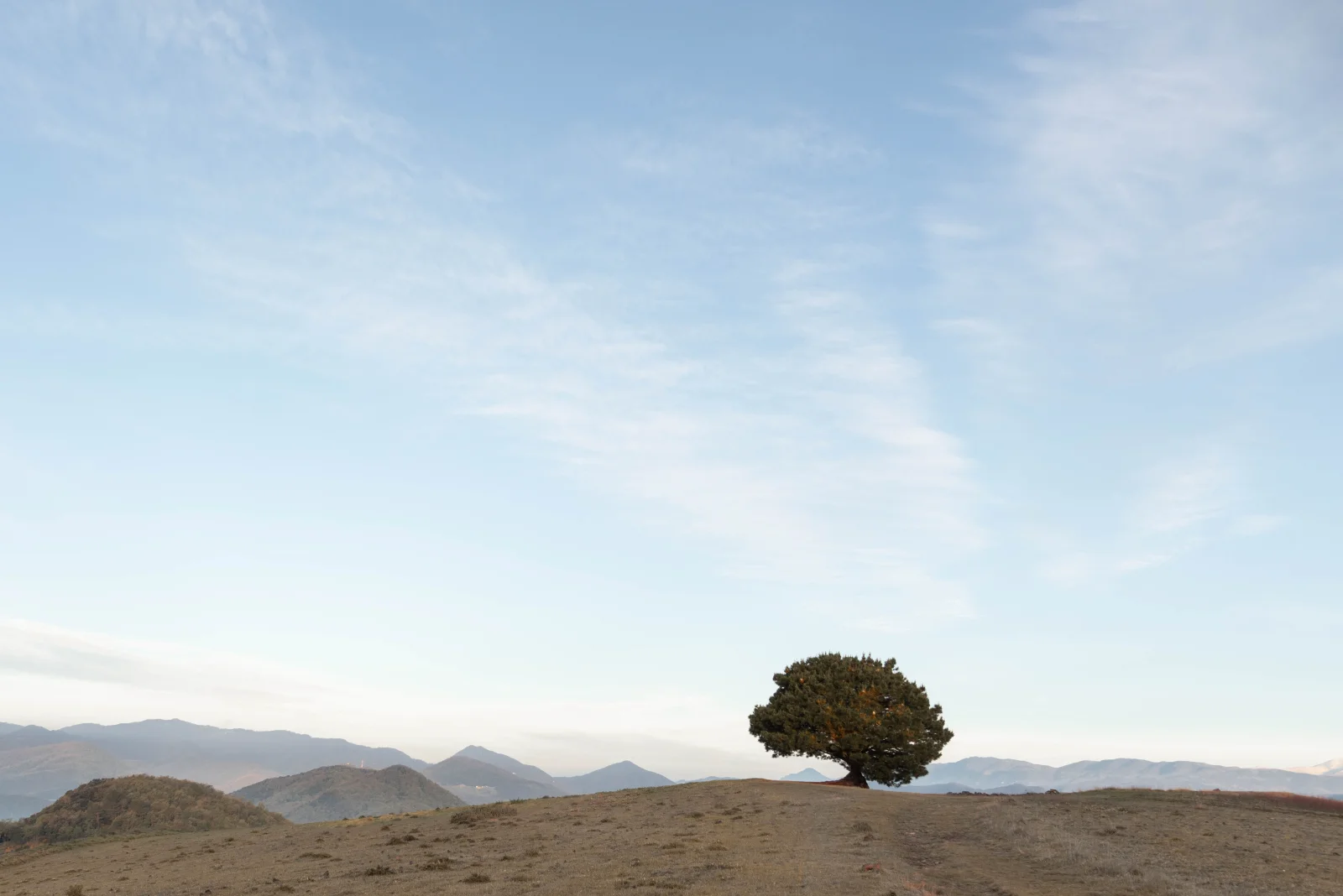
La Garrotxa is a comarca, roughly a Catalan county, in northern Catalonia. It contains more than forty volcanoes, damp forests, medieval villages and a rugged northern area that feels considerably wilder than the polished photographs suggest.
Do not try to see everything over one weekend. On a first visit, prioritise la Fageda d'en Jordà, the Croscat volcano, Santa Pau, Olot, Castellfollit de la Roca and Besalú. Then choose according to your interests: hiking, Romanesque churches, cycling or swimming in water cold enough to make the decision feel briefly questionable.
The essentials for a first visit
La Fageda d'en Jordà. This beech forest grows on an old lava flow, which is unusual at such a low altitude. Its popularity is justified, particularly once you leave the busiest access paths. Autumn is beautiful and crowded. Avoid Sunday lunchtime if silence is part of the plan.
The Croscat volcano. Former quarrying exposed the volcano's different layers, making this the easiest place to understand the area's geology. Stay on the marked route and do not climb the exposed slope or take volcanic rocks home.
The Santa Margarida volcano. Its broad crater contains a small chapel. Walking down is straightforward; walking back up naturally requires more effort. Wear shoes with a reasonable grip, especially after rain.
Santa Pau. A compact medieval village with stone lanes, an arcaded square and a castle. Visit early or late in the day, and try fesols de Santa Pau, the small local white beans. It does not require a full day, but deserves more than a photograph from the car park.
Olot. The local capital is more than a convenient place to sleep. It has a market, Modernista architecture, museums, everyday shops and four volcanoes within the municipality. Give it at least half a day.
The Montsacopa volcano. You can walk up from central Olot for wide views over the town, nearby volcanoes and surrounding mountains. Late afternoon normally brings softer light and less heat.
Espai Cràter. This volcano interpretation centre is partly built into the Puig del Roser volcano. Visiting early in the trip makes the landscape much easier to understand. It is also genuinely useful with children or in wet weather.
Beyond the standard volcanic postcard
Parc Nou and la Moixina. Monumental oak trees, wetlands, springs and easy paths close to Olot. It is not a major attraction with a dramatic finale, just a very pleasant place to slow down.
Parc de Pedra Tosca. Dry-stone walls, old huts and tiny agricultural plots created on a lava flow. Enter from the greenway and respect private land. Looking picturesque does not turn someone's field into a public photo studio.
Xenacs and Puig Rodó. One of the finest viewpoints over the Vall d'en Bas and the volcanic landscape. Road access may be regulated at certain times, so check current conditions. Check the forecast too: in thick cloud, the celebrated view is mainly an impressive shade of white.
Castellfollit de la Roca. The village stands on a long basalt cliff between the Fluvià and Toronell rivers. See it from below before walking through the old centre to the viewpoint. Stopping for ten minutes with the hazard lights on does not count as exploring it.
Sant Joan les Fonts. The three lava flows route follows the river past several basalt formations. Add the Romanesque monastery, medieval bridge and Juvinyà castle for a visit combining geology and history.
Besalú. The fortified medieval bridge receives most of the attention, but Sant Pere, Sant Vicenç and the former Jewish quarter are also worth seeing. Arrive early or stay after the tour groups leave.
Beuda. A quieter area near Besalú with small Romanesque churches and rural roads. Check which buildings are open before setting out and allow more time than the distances on the map suggest.
Places for a longer stay
Sadernes and Sant Aniol d'Aguja. One of the classic hikes in Alta Garrotxa, the rugged northern part of the region. The route is long, mobile coverage is limited and services are scarce. Carry water, food and suitable equipment. Vehicle access is regulated during certain periods.
Oix. A small mountain village reached by winding roads. The journey is part of the appeal, so do not squeeze it between two timed bookings.
Els Hostalets d'en Bas. Its main street of houses with wooden balconies is one of the valley's best-known scenes. Continue along the surrounding paths and remember that the attractive houses are still private homes.
Sant Privat d'en Bas. A tiny settlement at the enclosed end of the valley beneath the Puigsacalm. Come for the setting and the quiet atmosphere, not a long list of monuments.
The Puigsacalm. An emblematic mountain overlooking the Vall d'en Bas. Several routes reach it and they are not equally difficult. Check distance, ascent, weather and daylight: this is a mountain hike, not a city viewpoint.
Sant Feliu de Pallerols. A river, springs, bridges and an understated old centre. It works particularly well with a walk or cycle along the greenway.
The gorgs of les Planes d'Hostoles. These natural pools and waterfalls are extremely popular in summer. Some require advance booking during regulated periods. Use official entrances and car parks rather than inventing an alternative when they are full.
The Carrilet greenway. A former railway route connecting Olot and Girona. There is no need to complete the entire trail: choose a section through the Vall d'en Bas or the Brugent valley and plan your return.
The Vall de Bianya and the Capsacosta Roman road. A rural valley scattered with Romanesque churches and an ancient paved route. The stones can be slippery after rain, and the climb is more substantial than some photographs imply.
Batet de la Serra. A volcanic plateau of farmhouses, meadows and old paths just outside Olot. Explore it on foot or by bicycle rather than searching for one definitive viewpoint.
Riudaura. A small village in a quiet wooded valley. It has no famous bridge or essential monument, which is precisely why it belongs on this list.
How long to stay
With one day, combine la Fageda d'en Jordà, the Croscat volcano and Santa Pau. With two days, add Olot, Montsacopa and either Castellfollit de la Roca or Besalú. From three days onwards, include the Vall d'en Bas, the natural pools or Alta Garrotxa.
A car is the easiest way to explore. There is no railway in La Garrotxa, and public transport does not conveniently reach every village or trailhead. That said, once you arrive in each area, park properly and continue on foot.
Check official sources for seasonal reservations, regulated access and trail conditions before leaving. Choose five or six places, allow time for lunch and keep something for another visit. La Garrotxa is considerably better when you stop treating it as a checklist.